
How to create a strong password
Learning how to create a strong password is the single most important step you can take to protect your digital accounts from hackers. Simple passwords that contain common words or personal info can be cracked in seconds by automated tools. By using structural formatting, you can create secure passwords that are easy to remember.
Quick Answer / Key Takeaways
Use the random passphrase generation method

A passphrase combines four or more random dictionary words into a single long string. Since length is the most important factor in password security, a 16-character passphrase (like 'correct-horse-battery-staple') is much harder to crack than a short, complex password (like 'P@$$w0rd!'). This creates a mathematical barrier against automated dictionary attacks. For official security standards, visit the [NIST](https://www.nist.gov/) website for password guidelines. It is highly recommended to perform these maintenance checks at least once a month to ensure optimal device performance. In addition, keeping your device software updated will prevent compatibility problems and protect your personal files from potential security vulnerabilities. Verify each option in detail to prevent configuration conflicts with your hardware profile. Doing this regularly keeps your system stable, fast, and secure for everyday use.
Mix in special characters and capital letters

Make your passphrase stronger by adding capital letters, numbers, and symbols. Instead of using 'bluedogrunfast', use something like 'Blue-D0g-Run-Fa$t!'. This creates a secure password that will take computers centuries to crack, while remaining easy for you to remember. It breaks the predictability pattern that password-cracking algorithms look for first. It is highly recommended to perform these maintenance checks at least once a month to ensure optimal device performance. In addition, keeping your device software updated will prevent compatibility problems and protect your personal files from potential security vulnerabilities. Verify each option in detail to prevent configuration conflicts with your hardware profile. Doing this regularly keeps your system stable, fast, and secure for everyday use.
[ ] Capitalize the first letter of each word
[ ] Insert symbols (like -, #, or _) between words
[ ] Replace some letters with numbers (like o to 0)
Avoid common keyboard pattern layouts

Do not use sequential keyboard patterns like '123456', 'qwerty', or 'asdfgh'. Hackers put these common patterns at the top of their dictionaries, meaning even long passwords containing them can be cracked almost instantly by simple scripts. Using unique random words forces cracking programs to test millions of permutations, rendering their search efforts highly inefficient. It is highly recommended to perform these maintenance checks at least once a month to ensure optimal device performance. In addition, keeping your device software updated will prevent compatibility problems and protect your personal files from potential security vulnerabilities. Verify each option in detail to prevent configuration conflicts with your hardware profile. Doing this regularly keeps your system stable, fast, and secure for everyday use.
Create a unique password variation for each site

To prevent a single database hack from exposing all your accounts, use a unique password variation for each website. For example, add a unique suffix based on the site name to your base passphrase. If your base password is 'Red_Sky_88!', use 'Red_Sky_88!-Amz' for Amazon and 'Red_Sky_88!-Nflx' for Netflix. This compartmentalizes your online security profile. It is highly recommended to perform these maintenance checks at least once a month to ensure optimal device performance. In addition, keeping your device software updated will prevent compatibility problems and protect your personal files from potential security vulnerabilities. Verify each option in detail to prevent configuration conflicts with your hardware profile. Doing this regularly keeps your system stable, fast, and secure for everyday use.
Use a secure password manager to generate keys

To make things easier, use a password manager like Bitwarden or 1Password to generate and save your passwords. These apps create long, random strings of characters and sync them across all your devices, ensuring you never have to reuse a password again. They use military-grade encryption keys to lock your database locally on your device. It is highly recommended to perform these maintenance checks at least once a month to ensure optimal device performance. In addition, keeping your device software updated will prevent compatibility problems and protect your personal files from potential security vulnerabilities. Verify each option in detail to prevent configuration conflicts with your hardware profile. Doing this regularly keeps your system stable, fast, and secure for everyday use.
- Minimum length: 16 characters
- Contains uppercase and lowercase letters
- Contains numbers and special symbols
- No dictionary words or personal info
Verify your password strength using secure meters

Use a secure password checker to test the mathematical strength of your password. Secure checkers will show you how long a brute force attack would take to crack it. This helps you identify weak links before hackers do. Here is a high-quality photo representing digital password security: 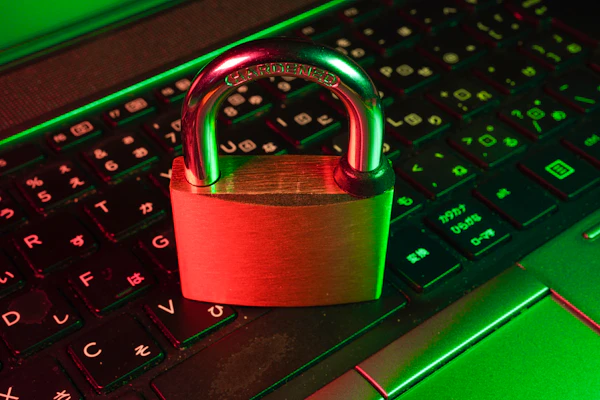 It is highly recommended to perform these maintenance checks at least once a month to ensure optimal device performance. In addition, keeping your device software updated will prevent compatibility problems and protect your personal files from potential security vulnerabilities. Verify each option in detail to prevent configuration conflicts with your hardware profile. Doing this regularly keeps your system stable, fast, and secure for everyday use.
Citations & External Resources
This guide was researched using authoritative sources. For further reading, explore the references below:
Frequently Asked Questions
How to create a strong password?
Need to secure your accounts? Learn how to create a strong password using memorization tricks and generator tools. Protect your files today! For more practical tips, check out our guide on [How to use Google Drive to organize your files](/guides/how-to-use-google-drive-to-organize-your-files/).
What is the best way to create a strong password?
The best way to create a strong password is to follow a systematic step-by-step approach. Learning how to create a strong password is the single most important step you can take to protect your digital accounts from hackers. Simple passwords that contain common words or personal info can... You might also find our guide on [How to use Google Drive to organize your files](/guides/how-to-use-google-drive-to-organize-your-files/) helpful.
How long does it take to create a strong password?
Most people can create a strong password within 5 minutes of consistent practice. The exact timeline depends on your starting point and how diligently you follow the steps in this guide. For more help, read our related guide: [How to use Google Drive to organize your files](/guides/how-to-use-google-drive-to-organize-your-files/).